Guides / Materials
Food Grade and Detectable Acetal: What to Ask For and What to Get in Writing
September 21, 2026
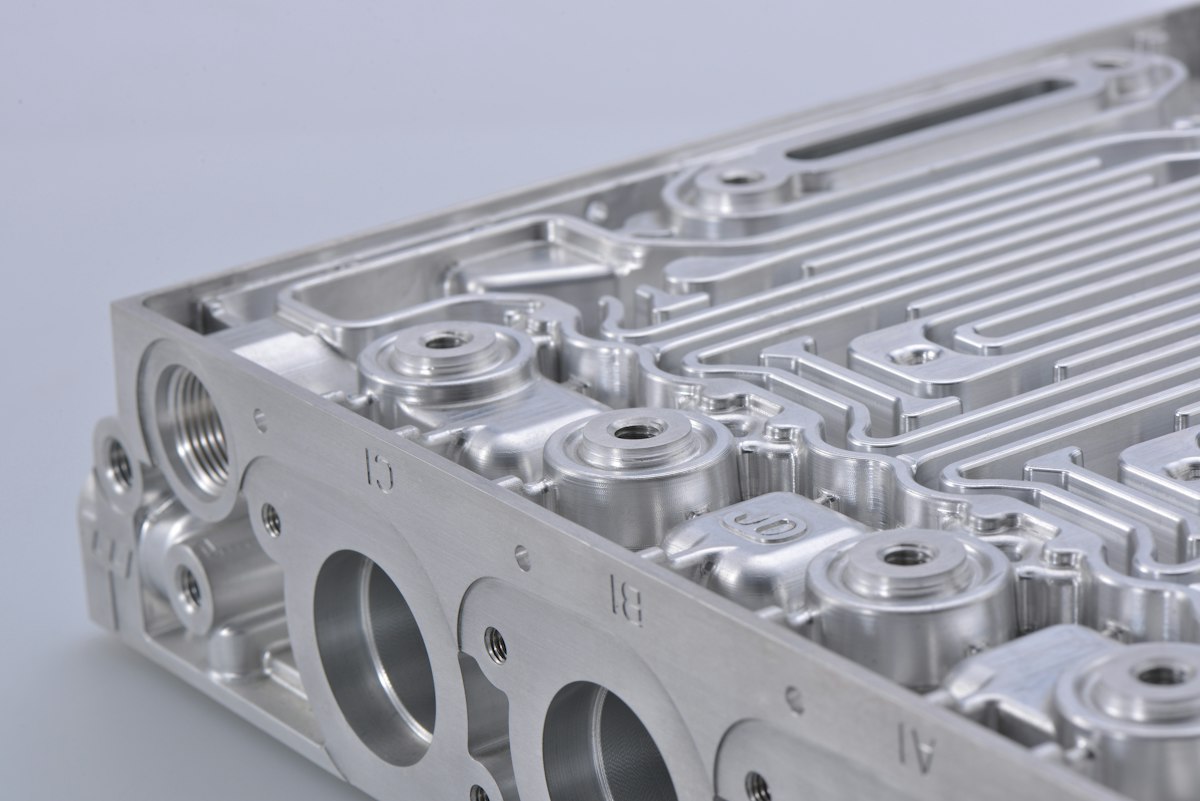
Food equipment parts in acetal are ordinary machining jobs with an extra requirement: paperwork. Getting the paperwork right at RFQ stage costs nothing. Getting it wrong means parts you cannot install.
What compliance actually means
Two frameworks come up most:
- FDA, under the relevant sections of 21 CFR, covering materials for repeated food contact in the United States
- EU 10/2011, the plastics regulation covering food contact materials in Europe
A compliant grade is one the resin producer has documented against the relevant framework. Compliance belongs to the grade and the batch, not to the material family. Natural acetal is not food grade by default.
Some plants also require NSF listing for equipment components, and dairy or meat lines may add their own requirements on top.
Ask for the document, not the claim
The thing to request with your quote is the compliance declaration for the specific grade, plus batch traceability if your quality system needs it. A shop that machines food equipment regularly produces this without a special request. A shop that does not will tell you it is fine and have nothing to send.
Put it on the RFQ in one line:
Supply material compliance declaration (FDA 21 CFR and EU 10/2011) and batch certificate with first shipment.
Why so much of it is blue
Food contact acetal is commonly sold in blue. The reason is simple: no food is blue, so a chip that breaks off a worn part is visible on the line and in the product.
Blue is a visibility convention. It is not a compliance statement on its own, though blue grades are usually also compliant.
Detectable grades
A visible chip is good. A chip that stops the line automatically is better. Two options exist:
Metal detectable. The grade carries a filler that trips an inline metal detector. Useful on lines that already run a metal detector at the end.
X-ray detectable. The grade is dense enough to show up on an X-ray inspection system. Used where X-ray is the inspection method, often for packaged product.
These are different fillers solving different inspection methods. Ask your quality team which equipment the line runs before you specify, because a metal detectable part is invisible to an X-ray system and the reverse is also true.
Detectable grades cost more, come in fewer stock sizes and are slightly weaker than the unfilled base. That is usually an easy trade for a part in the product stream.
Washdown chemistry decides the family
The single most useful thing to know before picking homopolymer or copolymer is what cleans the line.
- Mild detergent, ambient or warm: either works
- Hot water above roughly 60 degrees C, daily: copolymer
- Alkaline clean in place: copolymer
- Chlorinated sanitiser at concentration: neither is happy, discuss it with the shop and expect a service life limit
- Strong acid descaling: acetal is the wrong material, look elsewhere
Copolymer is the common default for food equipment for exactly this reason. It tolerates hot water and alkali far better than homopolymer.
Typical parts
Star wheels and timing screws, product guides and rails, scrapers, bushings on washdown conveyors, filler nozzles and valve components, spacers and wear pads. Most are simple shapes where the material decision and the paperwork are harder than the machining.
What belongs on the drawing
- Grade and family, with substitution rules
- The compliance framework required
- Colour, and whether detectable is required and of which type
- Washdown chemistry and temperature
- Whether the part is in direct product contact or adjacent to it
That last point matters more than people expect. An adjacent part often does not need a compliant grade at all, and specifying one anyway adds cost and lead time for nothing.
Quoting a food equipment part? Send your RFQ with the compliance requirement stated and we will match you with shops that already supply that documentation. Reply within 24 business hours.
Frequently asked questions
Is blue acetal automatically food grade?
No. Blue is a visibility convention, not a compliance statement. A blue grade is usually also compliant and often detectable, but the compliance comes from the documentation for that specific grade and batch, not from the colour.
What is the difference between metal detectable and X-ray detectable acetal?
Metal detectable grades carry a filler that trips an inline metal detector. X-ray detectable grades are dense enough to show on an X-ray inspection system. Lines use one or the other, sometimes both, so ask which your inspection equipment is before specifying.
Should I specify homopolymer or copolymer for food equipment?
Copolymer is the common default because it survives hot water and alkaline cleaning better. Homopolymer food grades exist and are used where the mechanical demand is higher and the washdown is mild.
Need a quote for this part?
Send the drawing. We match you with up to 3 shops that machine acetal and reply within 24 business hours.
Get matched with a Delrin shop