Guides / Cost
Machined or Moulded Acetal: Finding the Crossover for Your Part
September 21, 2026
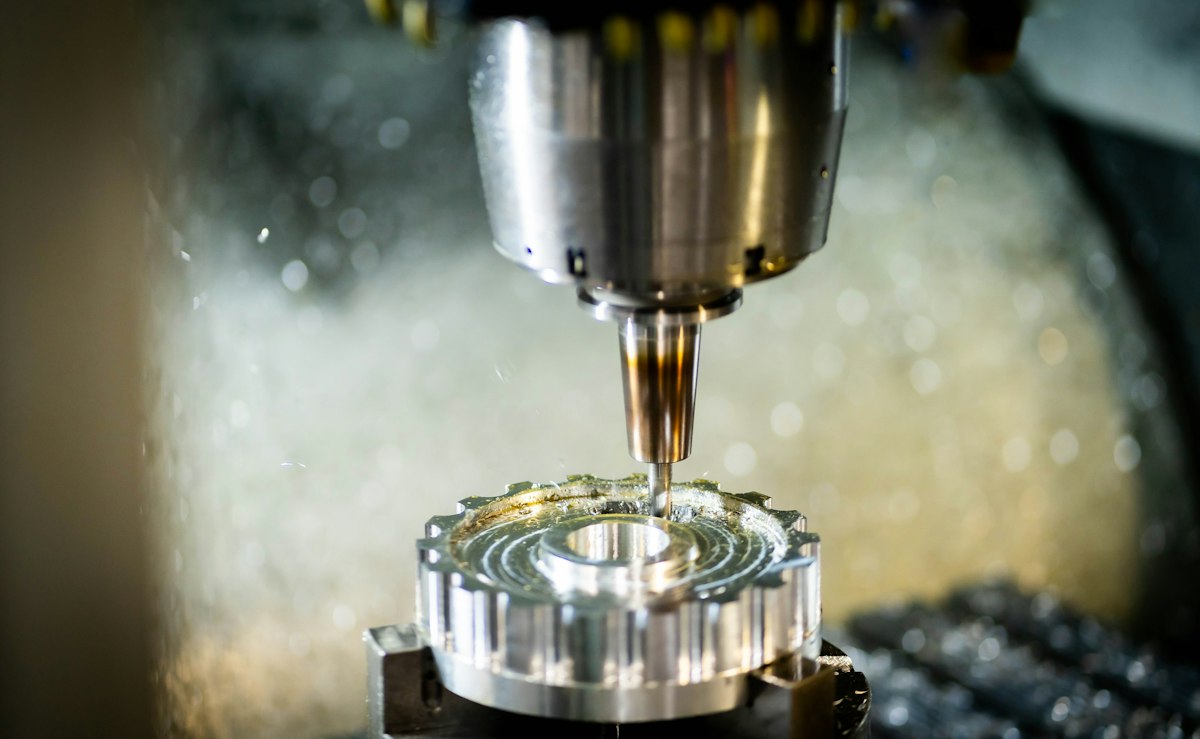
This comes up on almost every acetal part that looks like it might scale. The honest answer is that the crossover depends on the part, and the calculation is simple enough to do yourself in a few minutes.
The three costs
Machining has near zero setup investment and a per part cost that falls with quantity but never gets very low. Programming and fixturing are paid once per order. Material is bought as rod or plate, and a lot of it becomes chips.
Moulding has a large one off tooling cost and a per part cost that gets very low. Material use is efficient. Cycle times are seconds.
Post machined moulding sits in the middle. A moulded blank with the critical features machined afterwards. Useful when the geometry is mouldable but the tolerance is not.
Doing the calculation
Take your machined price per part at the quantity you actually need. Get a moulded price per part and the tooling cost. Then:
Crossover quantity = tooling cost / (machined price per part - moulded price per part)
If the crossover is well below your annual volume, mould it. If it is above your total lifetime volume, machine it. If it lands close to your annual volume, machine it anyway, because at that point the tooling does not pay back before the design changes.
What moves the crossover
Part size. A large part uses a lot of acetal. Machining wastes most of the block, moulding does not, and the material saving alone can move the crossover down sharply.
Geometry complexity. Undercuts, side actions and complex parting lines make tooling expensive. A part that needs three side actions may never justify a tool at moderate volume.
Tolerance. If the critical features cannot be held as moulded, you are paying for tooling and then machining anyway. That usually pushes the crossover up a long way.
Design stability. A design still changing is a design that should be machined. A tool change costs real money and weeks.
Lead time. Tooling commonly takes weeks. If you need parts in ten days, the calculation is over regardless of quantity.
What acetal specifically brings to this
Acetal is one of the better materials for machining, so the machined per part cost is lower than it would be in a difficult plastic. It cuts fast, it breaks chips and tool life is long. That pushes the crossover quantity up compared with, say, PEEK or glass filled nylon.
Acetal is also a well behaved moulding material with predictable shrinkage, so the moulded route is not risky. Shrinkage is however significant and anisotropic enough that a moulded part is not dimensionally identical to a machined one from the same model. Plan to validate.
One thing that catches people: machined acetal comes from extruded stock and moulded acetal does not, so the internal stress state is different. A part that needed annealing when machined may not when moulded, and a part that was fine machined may warp moulded. These are different processes producing the same shape, not the same part made two ways.
A practical decision path
- Under 100 pieces, ever? Machine.
- Design still moving? Machine.
- Need parts inside a month? Machine, at least for the first batch.
- Critical tolerance not mouldable? Machine, or mould and post machine.
- Thousands per year, stable design, mouldable geometry? Get a tooling quote and run the crossover calculation.
- Landed near the crossover? Machine. The flexibility is worth more than the marginal saving.
The middle route people forget
Machining a moulded blank. If your volume justifies a tool but your tolerance does not survive moulding, a simple tool producing a near net blank plus a short machining operation on the critical features can beat both pure routes.
It needs a shop that will handle both, which is worth raising at RFQ stage rather than after the tool is cut.
Where we fit
We match RFQs with machine shops. If your part is clearly a moulding job we will say so rather than matching you with a shop that would have to quote it as machining, because a quote nobody can win wastes your time and theirs.
Not sure which side of the line your part sits on? Send your RFQ with the annual quantity and we will tell you plainly. Reply within 24 business hours.
Frequently asked questions
At what quantity should I switch from machining to moulding acetal?
There is no single number. For a small simple part the crossover often sits in the low thousands. For a large or complex part it can be far higher, and for some parts it never arrives. Tooling cost against per part saving is the calculation, and lead time is the tie breaker.
Are machined acetal parts more accurate than moulded ones?
Generally yes. Machining holds tighter tolerances and does not have to live with shrinkage, warpage or gate and ejector marks. A moulded part can be post machined on its critical features, which is a common middle route.
Can I use machined parts for pilot production and then mould?
Yes, and it is the usual path. One thing to plan for is that a moulded part shrinks differently and may need small geometry changes, so validate on moulded parts before committing to volume.
Need a quote for this part?
Send the drawing. We match you with up to 3 shops that machine acetal and reply within 24 business hours.
Get matched with a Delrin shop