Guides / Process
Surface Finish on Machined Acetal Parts and How to Ask for It
September 21, 2026
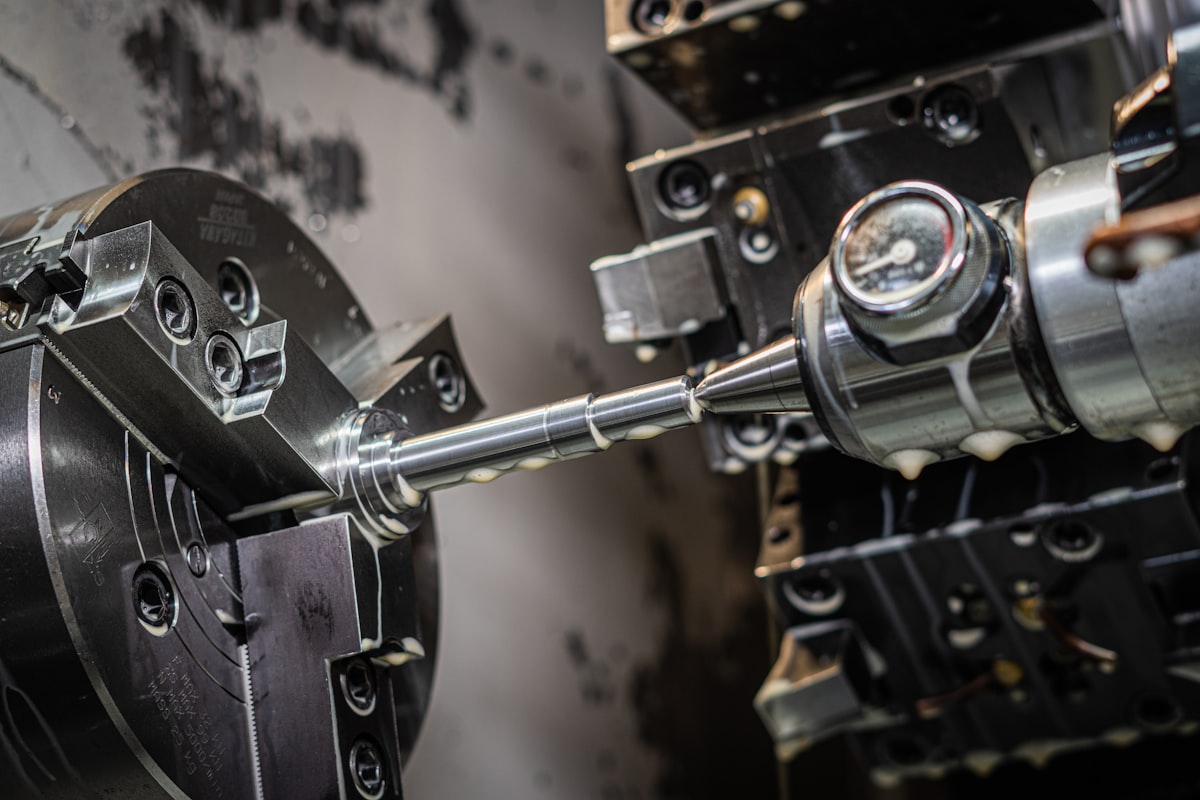
Acetal is one of the better behaved plastics for surface finish. It shears cleanly, it does not tear and a sharp tool leaves a surface that needs nothing further on most parts. That makes over specification the more common problem here, not under specification.
What you get as machined
With sharp tooling and a sensible finishing pass, typical as machined values land around Ra 0.8 to 1.6 micrometres. A careful finish pass with a small nose radius and a light depth can get below Ra 0.8.
For comparison, that is already better than most as machined aluminium. On the large majority of acetal parts, no finish callout is needed at all.
When finish actually matters
Sealing faces. A face that an O ring or a gasket sits against needs a specified finish, because a machining lay that runs across the seal is a leak path. This is the most common legitimate reason to put a number on the drawing.
Sliding surfaces. A bushing bore or a slide face benefits from a smooth finish, although acetal’s low friction means it is less critical than in metal. Too smooth is also possible, since a very smooth surface holds no lubricant.
Cosmetic and visible parts. Consumer facing components where a machining mark is a product complaint.
Cleanability. Food and medical parts where a rough surface holds residue. Here the requirement is usually a maximum Ra plus a note about no crevices, not a mirror finish.
Finishing operations and what they cost
| Operation | Typical result | What it adds |
|---|---|---|
| As machined, sharp tool | Ra 0.8 to 1.6 | Nothing |
| Careful finish pass | Ra 0.4 to 0.8 | A little machine time |
| Hand polishing | Ra 0.2 or better, glossy | Hand time, scales badly with quantity |
| Bead blasting | Uniform matte | A separate operation, hides machining lay |
| Vapour or flame polishing | Not used on acetal | Not applicable, this is an acrylic technique |
Two things worth knowing. Acetal does not respond to the vapour polishing that works on acrylic and polycarbonate. And bead blasting changes the surface in a way that can matter for a sliding part, so do not specify it for cosmetic uniformity on a bearing face.
Burrs are the real issue
The finish specification people argue about is usually not the problem. Burrs are.
Acetal forms a fine flexible burr on sharp edges. It does not snap off the way a metal burr does, it folds over and stays attached. On a part with many intersecting features, deburring is real hand time and it belongs in the quote.
Two lines on the drawing solve most of it:
Break all sharp edges 0.2 to 0.4 mm unless otherwise noted. No burrs permitted on faces marked critical.
That gives the shop something to quote and something to inspect against. Leaving it to “remove all burrs” with no size means every shop interprets it differently and the quotes stop being comparable.
How to write a finish note
Specify a maximum, on the faces that need it, and only there:
Ra 0.8 max on faces A and B (O ring seats). All other surfaces as machined.
Three things make that note work. It gives a number, it names the faces and it explicitly releases everything else. A blanket Ra 0.4 on a whole part multiplies cost for no functional gain, and it is one of the most common ways a simple acetal part gets expensive.
Colour and appearance
Natural acetal is an off white that varies slightly between suppliers and batches. If appearance matters across a set of parts, say so and expect the shop to hold one batch of stock, which affects lead time.
Black acetal is more consistent in appearance and holds up better outdoors. For any visible part, black is usually the easier specification.
Need a part where the seal face matters? Send your RFQ with the functional faces marked, and we will match you with shops that quote the deburring honestly. Reply within 24 business hours.
Frequently asked questions
What surface finish comes standard on machined acetal?
As machined, somewhere around Ra 0.8 to 1.6 micrometres is typical, and a careful finishing pass gets below that. Acetal takes a good finish straight off the tool, better than most plastics, so a specification is often unnecessary.
Can machined acetal be polished?
Yes, and it polishes well because of its fine crystalline structure. Expect an extra operation and hand time. It is worth it for sealing faces and optical or cosmetic parts, and wasted almost everywhere else.
Why does my acetal part still have burrs?
Acetal holds a fine flexible burr on sharp edges rather than breaking it off. It needs deburring as a real operation, usually by hand. An edge break note on the drawing turns that from guesswork into a quoted line.
Need a quote for this part?
Send the drawing. We match you with up to 3 shops that machine acetal and reply within 24 business hours.
Get matched with a Delrin shop