Guides / Design
Threading Acetal: Tapped Holes, Inserts and Joints That Survive Assembly
September 21, 2026
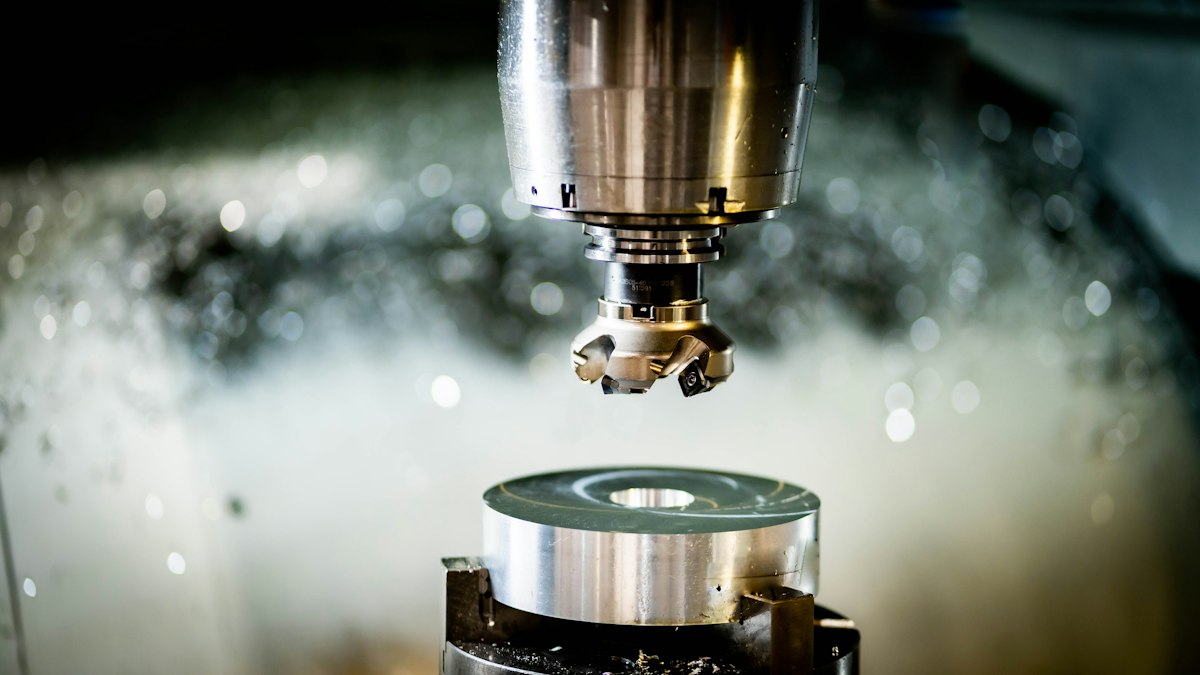
A tapped hole in acetal looks the same as a tapped hole in aluminium and behaves nothing like it. Most plastic thread failures trace back to a drawing that treated the two as interchangeable.
Why plastic threads fail
Thread strength in any material comes from the shear area of the engaged threads. Acetal has roughly a tenth of the shear strength of aluminium, so the same thread geometry carries far less.
It also creeps. A thread that is fine at assembly can relax over months under a sustained preload, which is why an acetal joint that was tight in January can be loose by June.
And it is notch sensitive. A thread root is a notch, so a threaded section under bending load has a stress concentration built into it by definition.
The rules that actually matter
Engagement depth. At least one and a half to two thread diameters of full engagement. Two is the safer default. This is the single most effective change you can make, and it costs nothing but a slightly thicker boss.
Coarse over fine. A coarse thread puts more material in each form. Fine threads strip earlier and are harder to tap cleanly in a soft material.
Larger diameter over more depth. If a joint is marginal, going up a size does more than adding depth.
Generous boss wall. The material around a tapped hole carries hoop stress. A thin wall around a thread splits. Plan on a boss outside diameter of around twice the thread diameter as a starting point.
Chamfer the entry. A chamfered lead-in stops the first thread being damaged on assembly, and the first thread is the one that carries the most load.
Torque specification. Put an assembly torque on the drawing. Without one, somebody will use the value they would use in metal and the joint will fail on the bench.
Threaded inserts
For any joint that will be taken apart more than a few times, an insert is the right answer.
Heat set inserts are installed with a heated tool that melts a thin layer of plastic which then flows around the knurl. Reliable in acetal when the hole is sized correctly, although acetal’s low surface energy means the bond is mechanical rather than chemical.
Press fit inserts are simple and cheap but rely entirely on interference, which acetal will relax over time through creep.
Moulded in inserts do not apply here, since these are machined parts.
Heat set is the usual choice on machined acetal. Get the receiving hole diameter from the insert manufacturer rather than guessing, because the tolerance window is narrower than in most plastics.
Threading the outside
External threads on an acetal shaft are common on fittings and caps. The same rules apply, plus two:
- Avoid a sharp thread runout. A relief groove at the end of the thread removes a stress raiser that otherwise cracks under torque.
- Do not rely on a plastic to plastic thread for sealing. Use an O ring or a gasket face and let the thread only carry the clamp load.
What a shop needs on the drawing
- Thread callout with the standard, for example M6 x 1 rather than just M6
- Full thread depth, stated separately from the drilled hole depth
- Whether an insert is used, with the manufacturer part number if so
- Assembly torque
- Whether the thread is functional or a convenience
That last point is worth stating because it tells the shop where to spend effort. A tapped hole for a cover screw and a tapped hole carrying a bearing preload deserve different care.
A quick sanity check before you release the drawing
Ask yourself how many times this joint gets assembled over the life of the product. If the answer is more than three, put an insert on the drawing. If the answer is once, a well proportioned tapped hole is fine.
Designing an acetal part with threaded joints? Send your RFQ with the drawing and the assembly torque, and the shops we match will flag anything that will not survive. Reply within 24 business hours.
Frequently asked questions
How deep should a tapped hole in Delrin be?
Plan on at least one and a half to two times the thread diameter of full engagement, and more if the joint will be assembled repeatedly. A depth that works in steel is usually not enough in acetal.
Coarse or fine thread in acetal?
Coarse, almost always. A fine thread puts less material in each thread form and strips at a lower torque. Fine threads in plastic are for adjustment mechanisms, not for load carrying joints.
When should I use a threaded insert instead of tapping the plastic?
Whenever the joint will be taken apart more than a few times, whenever the torque matters, and whenever a stripped thread means scrapping an expensive part. Inserts cost a little at assembly and save a lot in service.
Need a quote for this part?
Send the drawing. We match you with up to 3 shops that machine acetal and reply within 24 business hours.
Get matched with a Delrin shop