Guides / Materials
Acetal or PEEK: When a Part Really Needs the Expensive Plastic
September 21, 2026
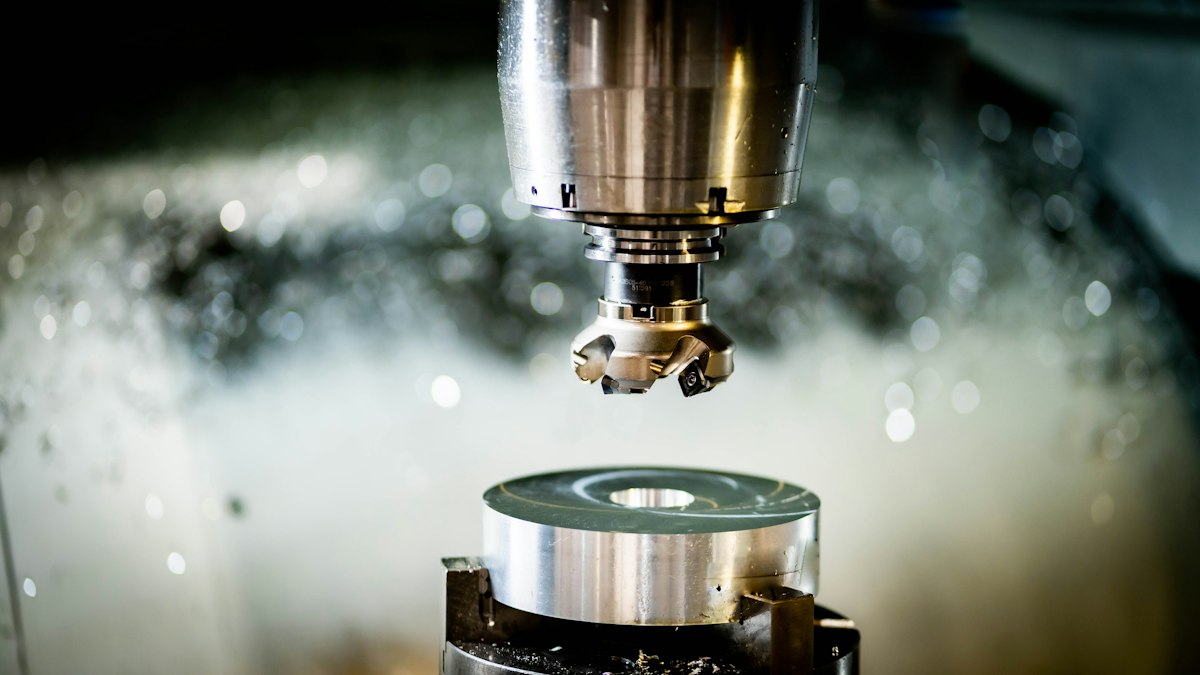
PEEK is the material people reach for when a plastic part has failed and nobody wants to think about it again. Sometimes that is right. Often it is an expensive way to solve a problem that was really a design or a tolerance problem.
Here is how to tell which situation you are in.
The four reasons PEEK earns its price
Temperature. Acetal is generally held to around 90 degrees C in continuous service, a little more for brief excursions. PEEK runs far above that and keeps useful mechanical properties there. If your part sits in a hot environment all day, this is the whole argument and you can stop reading.
Steam and hot water. Acetal homopolymer degrades in hot water over time. Copolymer handles it better but still has a ceiling. Parts that go through repeated steam sterilisation are PEEK territory.
Aggressive chemistry. Acetal handles fuels, solvents, neutral salts and weak alkalis. It does not handle strong acids or strong oxidisers. PEEK handles almost everything short of concentrated sulphuric acid.
Regulatory and traceability demands. Implantable and some other medical work, semiconductor wet process parts and certain aerospace specifications call out PEEK by name. When the specification names it, the comparison is over.
Where acetal quietly wins
At room temperature, against a steel counterface, acetal often has the lower coefficient of friction and the better wear rate of the two. PEEK is harder and stiffer, which is not the same as being the better bearing.
Acetal also machines faster and more forgivingly. It breaks chips, it does not need the same tool life budget and it does not require the stress relief discipline that thick PEEK sections do. On a small production run that difference alone can be most of the cost gap.
Side by side
| Question | Acetal (POM) | PEEK |
|---|---|---|
| Continuous service temperature | Around 90 degrees C | Far higher |
| Stock cost | Baseline | Commonly ten to fifteen times higher |
| Machining cost | Lower, cuts easily | Higher, harder on tooling |
| Stiffness | High for a commodity engineering plastic | Higher |
| Friction against steel at room temperature | Low | Comparable or slightly higher |
| Strong acid | Poor | Good |
| Steam sterilisation | Limited | Good |
| Water absorption | About 0.2 percent in 24 hours | Very low |
| Typical use | Gears, bushings, cams, fluid parts | Hot, chemically aggressive or regulated parts |
The middle ground people forget
Between acetal and PEEK sit several materials that solve most of the temperature problem for much less money. PET, PPS, and filled nylons all carry higher service temperatures than acetal without PEEK pricing. If the only reason you are looking at PEEK is that a part got warm, ask the quoting shop what else it runs.
Filled acetal grades are also worth a look before jumping. Glass filled acetal is stiffer and moves less with temperature, and PTFE filled acetal lowers friction further for dry running parts. Neither raises the service temperature much, but they solve stiffness and friction problems without changing material family.
Before you specify PEEK
Ask three questions about the failed part.
- Did it fail because of heat, or because of a sharp internal corner? Notch sensitivity kills more acetal parts than temperature does.
- Did it fail dimensionally, or structurally? A part that drifted out of tolerance may need annealing and a temperature note on the drawing, not a new material.
- Is the failing surface the whole part? A PEEK bushing pressed into an acetal housing costs a fraction of a solid PEEK part.
If you still land on PEEK, that is a clear answer and worth paying for. If you land back on acetal with a better drawing, that is the cheaper win.
Have a part you are unsure about? Send your RFQ with the service conditions and we will match you with shops that machine both. Reply within 24 business hours.
Frequently asked questions
How much more does PEEK cost than acetal?
Stock cost is commonly ten to fifteen times higher, and machining takes longer because PEEK is harder on tooling. On a small part the total can land several times the acetal price, and on a large one the gap is wider still.
At what temperature should I move from acetal to PEEK?
Acetal is generally held to around 90 degrees C in continuous service. Once your part sits above that for long periods, acetal stops being a candidate. PEEK carries a continuous rating far above it, which is the main reason people pay for it.
Is PEEK always better than acetal?
No. PEEK is stiffer, more heat resistant and more chemically resistant, but for a room temperature gear or bushing acetal often gives lower friction and better wear per dollar. Paying for PEEK where acetal works is a common and expensive mistake.
Need a quote for this part?
Send the drawing. We match you with up to 3 shops that machine acetal and reply within 24 business hours.
Get matched with a Delrin shop