Guides / Materials
Filled Acetal Grades and When Each One Is Worth Specifying
September 21, 2026
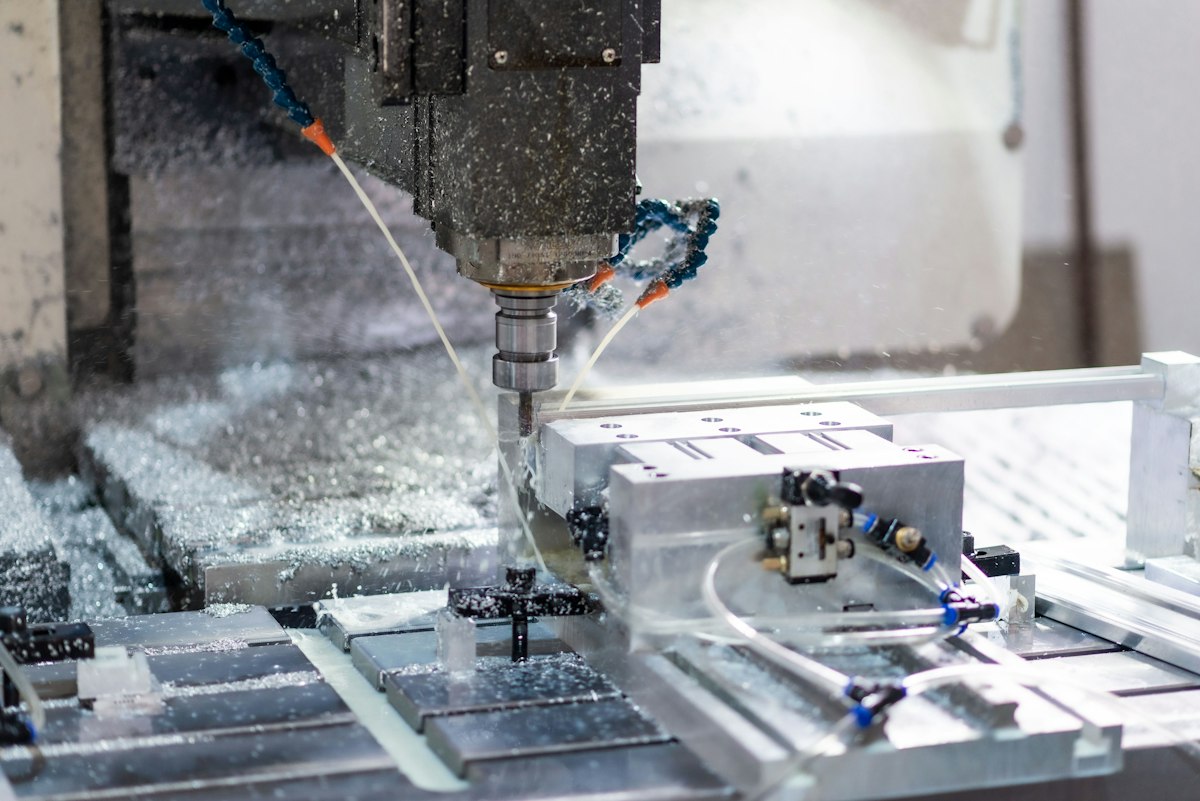
Natural acetal covers most parts. Filled grades exist for the ones it does not, and each filler buys one property at the cost of others. Knowing which trade you are making stops you from specifying an expensive grade that solves nothing.
PTFE filled acetal
Usually sold as a homopolymer with PTFE fibre dispersed through it. Delrin AF is the best known trade name.
What it buys: a lower coefficient of friction and much less stick slip. A dry running bushing or slide that chatters or squeaks in natural acetal often goes quiet in a PTFE filled grade.
What it costs: noticeably more per kilo, generally only available as rod, and slightly lower strength and stiffness than the unfilled base.
Where it belongs: dry running bearings, slides that must not stick, cams and followers with no lubrication, anything where a squeak is a product complaint.
Glass filled acetal
Typically 25 percent glass fibre, sold as POM-GF25 and similar.
What it buys: a large jump in stiffness and a meaningful drop in thermal expansion, roughly halving it. If your problem is a part that bends under load or grows too much when the machine warms up, this is the fix inside the acetal family.
What it costs: it is more brittle, especially at thin walls, sharp edges and around fasteners. It is abrasive and wears tooling faster, which shows up as a higher price per part on short runs. Surface finish is rougher because the fibres are exposed by the cutter.
Where it belongs: structural brackets, parts with a dimension that must survive a temperature swing, housings that carry a bearing load.
Where it does not: sliding surfaces. Exposed glass fibre is abrasive against a steel counterface, so a glass filled bushing can wear the shaft rather than itself.
ESD and static dissipative acetal
Acetal is an insulator by default, which is exactly wrong in an electronics or cleanroom line where static builds and discharges into product.
ESD grades bring surface resistivity down into the dissipative range, commonly somewhere between ten to the sixth and ten to the ninth ohms per square. Carbon filled versions are the usual route. Carbon free versions exist for cleanroom work where particle shedding matters.
What it costs: price, limited stock forms and usually a fixed colour. Mechanical properties are close to the base grade.
Where it belongs: wafer handling parts, electronics assembly fixtures, conveyor parts running dry film or packaging that charges.
Internally lubricated grades
Several suppliers sell acetal with silicone or oil dispersed through it. The effect is similar to PTFE filling, a lower friction surface without an applied lubricant, and it can be useful where a PTFE filled grade is not stocked.
Check compatibility before specifying one for food contact or for anything that touches a painted or bonded surface downstream, because migrating lubricant causes problems in both.
What to compare before choosing
| Grade | Stiffness | Friction | Machined finish | Stock availability | Relative cost |
|---|---|---|---|---|---|
| Acetal homopolymer, natural | High | Low | Excellent | Wide | Baseline |
| Acetal copolymer | Slightly lower | Low | Excellent | Wide | Baseline |
| PTFE filled | Slightly lower | Lowest | Good, needs sharp tools | Rod mostly | Higher |
| Glass filled 25 percent | Highest | Higher, abrasive | Rougher | Limited | Higher |
| ESD or static dissipative | Similar to base | Similar to base | Good | Limited | Highest of these |
How to specify one
Name the property you need and give the grade as an example, not as the only acceptable answer:
Material: PTFE filled acetal homopolymer, Delrin AF 100 or equivalent. Required for dry running, no lubricant permitted in service.
That phrasing lets a shop offer the equivalent it stocks, which often saves a week of lead time, while making clear what the part actually needs. Naming a single trade grade with no reason attached is the most common way an RFQ picks up an avoidable delay.
Unsure which filler fits your part? Send your RFQ describing the problem rather than the grade, and we will match you with shops that machine all of them. Reply within 24 business hours.
Frequently asked questions
Does PTFE filled acetal machine differently from natural acetal?
It cuts easily but it is softer and it smears more readily under a dull tool. Shops usually run sharp tooling and lighter finishing passes. Surface finish specifications that are easy in natural acetal can need an extra pass in a PTFE filled grade.
Is glass filled acetal worth it for stiffness?
When the part is a structural bracket or has to hold a dimension across a wide temperature range, yes. The trade is brittleness at thin walls and sharp edges, faster tool wear and a higher price per part on small runs.
Can I get filled acetal in the same stock sizes as natural?
Usually not. Filled grades are stocked in fewer diameters and thicknesses, often only in rod. Ask before you design around a section that needs a non standard size, because lead time on ordered-in stock can add a week or more.
Need a quote for this part?
Send the drawing. We match you with up to 3 shops that machine acetal and reply within 24 business hours.
Get matched with a Delrin shop