Guides / Process
How Shops Cut Delrin: Speeds, Feeds, Tooling and Chip Control
September 21, 2026
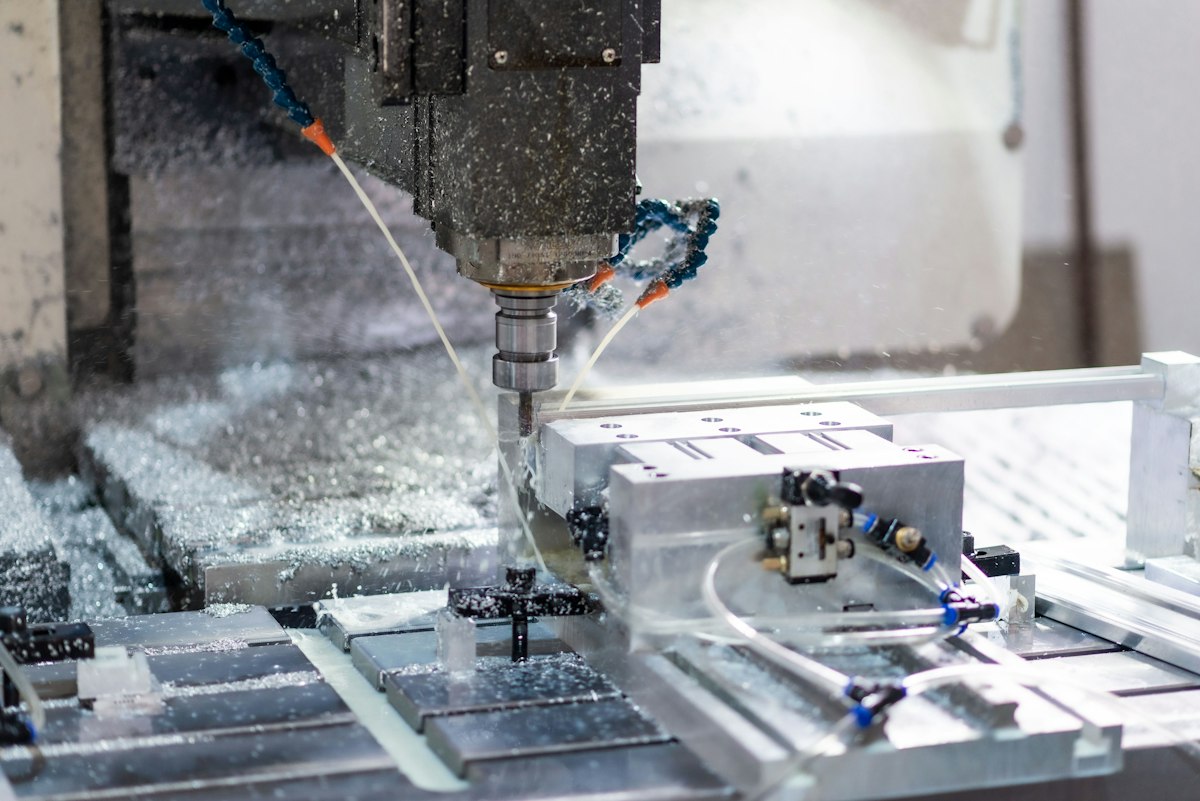
This guide is written for buyers who want to understand a quote, and for engineers who want to know what is reasonable to ask for. The numbers are typical starting points, not a specification. Every shop tunes them to its machines, its stock and its part.
Why acetal is a pleasant material to cut
Acetal is semi crystalline, dimensionally stable and not abrasive. It shears cleanly rather than tearing, so chips break instead of forming long strings once the feed is right. Tool life is long. A shop that also cuts glass filled nylon or PEEK will tell you acetal is the easy day.
The two things that go wrong are heat and stress, and both are controllable.
Typical starting parameters
| Operation | Cutting speed | Feed | Notes |
|---|---|---|---|
| Turning, roughing | 200 to 400 m/min | 0.1 to 0.3 mm/rev | Carbide, sharp positive rake |
| Turning, finishing | 300 to 500 m/min | 0.05 to 0.15 mm/rev | Small nose radius, light depth |
| Milling | 200 to 400 m/min | 0.05 to 0.2 mm/tooth | High helix, two or three flutes |
| Drilling | 50 to 100 m/min | 0.1 to 0.3 mm/rev | Peck deep holes, clear chips |
| Reaming | Low speed | Steady feed | Expect the bore to close slightly |
The general rule quoted across plastics machining is high speed with a healthy feed. Cutting speed keeps the edge shearing. Feed keeps the edge cutting rather than rubbing. Too slow a feed is what melts acetal, not too fast a spindle.
Tool geometry that works
- Rake: positive, commonly 10 to 20 degrees. Plastic wants to be sliced, not pushed.
- Clearance: generous, around 10 to 15 degrees, so the flank does not rub the elastic recovery behind the edge.
- Edge: sharp and kept sharp. A honed or worn edge that would still be fine in steel will smear acetal.
- Flutes: polished, high helix, few flutes. Two or three flutes give chips room to leave.
- Coatings: usually unnecessary. Uncoated polished carbide is common.
Chip control
Acetal chips break into short curls when the feed is right. When they do not, they wrap the tool or pack a bore, and packed chips are the leading cause of an oversized hole and a ruined finish.
Practical measures shops use:
- Air blast rather than flood on open milling, to move chips clear
- Peck cycles on deep drilling
- Through tool coolant or air on deep bores
- Climb milling for finish passes
Coolant, or not
Acetal can be cut dry. Many shops do. Air blast handles chip evacuation and the material is not abrasive, so tool life is not the problem it would be in steel.
Coolant earns its place on long finishing passes, deep bores and anywhere heat would otherwise build up in a thin wall. Water soluble coolant is the usual choice. Avoid aggressive chemistry and do not leave finished parts sitting in coolant.
Where the heat actually matters
Cutting temperature rarely damages acetal directly. What it does is expand the part while it is being measured. A part cut hot and gauged immediately reads larger than the same part an hour later, so a shop chasing a tight tolerance on a warm part is chasing its own tail.
This is why a shop machining a precision acetal part will let it sit, then finish, then let it sit again before inspection. It is also why an inspection temperature belongs on the drawing.
Workholding
Acetal is soft enough to mark and to spring under clamping. Standard measures:
- Soft jaws cut to the part
- Vacuum plates for flat parts
- Sacrificial fixtures for thin sections
- Lower clamping pressure than a metal part would take, with more clamps spreading the load
Workholding is often the largest single line in a quote for a thin acetal part, and it is setup time rather than machine time. That is worth knowing when a small quantity quote looks high.
What this means for a quote
If a quote for an acetal part comes back much higher than you expected, the reason is usually one of three things: workholding on a thin or awkward part, a stress relief cycle for a tight tolerance, or hand deburring on a part with many sharp edges. None of them are machine time, which is why comparing quotes on hourly rate alone tells you very little.
Want a part quoted by shops that cut acetal daily? Send your RFQ with the drawing and we will match you with up to three. Reply within 24 business hours.
Frequently asked questions
Does Delrin need coolant?
Not always. Acetal is often cut dry with an air blast to clear chips. Coolant helps on deep bores and long finishing passes where heat builds, and water soluble coolant is the usual choice. The bigger risk is trapped chips, not cutting temperature.
Why does my Delrin part have a melted looking surface?
Almost always a dull tool or too little feed. Rubbing generates heat where cutting would not. Sharper tooling and a higher feed per tooth usually fix it without changing anything else.
Can the same tooling cut acetal and aluminium?
It can, and plenty of shops do it. Dedicated plastic tooling with polished flutes and higher rake gives a better finish and longer chip control, but aluminium geometry is close enough that a shop with a busy mix will often run one set.
Need a quote for this part?
Send the drawing. We match you with up to 3 shops that machine acetal and reply within 24 business hours.
Get matched with a Delrin shop