Guides / Process
Machining Tolerances on Delrin and POM: What Is Realistic
September 16, 2026
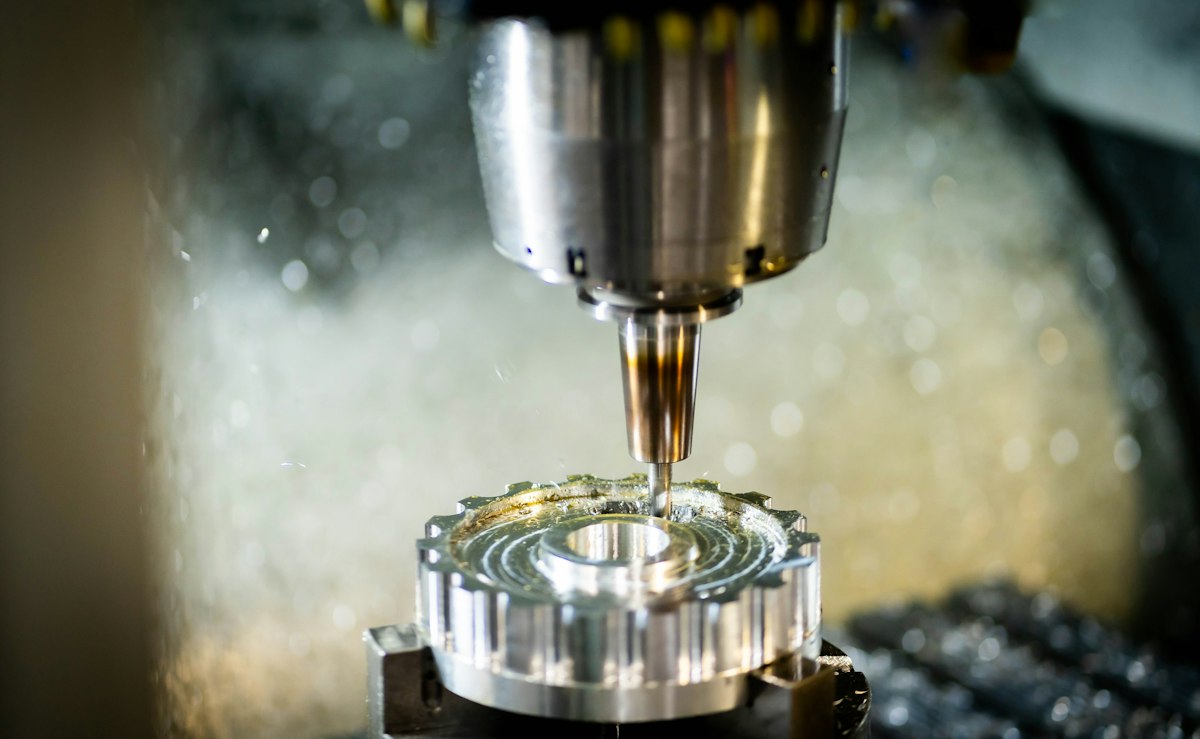
Acetal machines beautifully. Chips break, surfaces come out clean and tool life is long. The hard part is not cutting it. The hard part is that the part you measured in the machine is not the same size an hour later, or in a different room, or after a week on a shelf in a humid plant.
Three effects cause almost all of it.
Thermal expansion
POM expands roughly 110 micrometres per metre per kelvin. Steel sits near 12. So acetal moves about nine or ten times as much for the same temperature change.
Work it through on a real part. A 100 mm long plate, measured at 20 degrees C and again at 28 degrees C, grows about 0.088 mm. That is nearly two full steps of a plus or minus 0.05 mm tolerance, from nothing but the room being warm.
This is why acetal drawings should carry an inspection temperature. Twenty degrees C is the usual choice. Without one, you and the shop can both measure correctly and still disagree.
Moisture
Acetal takes up roughly 0.2 percent water in 24 hours of immersion and something under one percent at saturation. That is far less than nylon, which is one of the reasons POM gets picked in the first place. It is not zero.
A part machined dry and then put into service in water grows slightly. On a bushing with a 20 mm bore, that is small but measurable, and it is worth knowing if the bore is a running fit rather than a clearance hole.
Internal stress
Extruded rod and plate carry stress from how they cooled. Machining releases it unevenly. Take 8 mm off one face of a 25 mm plate and the plate bows, sometimes while it is still clamped, more often an hour after it comes off the machine.
Stress is the effect that catches people out, because it appears after inspection passes.
What shops actually hold
These are typical ranges from machining acetal in a shop with a stable temperature. They are not promises, and the shop quoting your part confirms them against your geometry.
| Feature | Routine | Achievable with care |
|---|---|---|
| General dimensions under 100 mm | plus or minus 0.05 mm | plus or minus 0.025 mm |
| Turned outside diameter, under 50 mm | plus or minus 0.05 mm | plus or minus 0.02 mm |
| Bore diameter, under 25 mm | plus or minus 0.05 mm | plus or minus 0.02 mm |
| Flatness on a 100 mm plate | 0.1 to 0.2 mm | 0.05 mm after stress relief |
| Length over 300 mm | plus or minus 0.15 mm | Depends on inspection temperature |
Anything tighter than plus or minus 0.02 mm in acetal is a conversation, not a drawing note. It can be done on a small feature, on a part that is allowed to settle, in a temperature controlled room. It cannot be done on every dimension of a large plate at any price.
When annealing earns its cost
A stress relief cycle means holding the part at an elevated temperature for a period that scales with wall thickness, then cooling it slowly. Shops run it in an oven or in a heated oil or salt bath. It costs a day or more of lead time and some oven time.
It is worth it when:
- The part is thick and a lot of material comes off one side
- Flatness or parallelism is tight over a long face
- The part is machined from plate rather than rod
- The part will see a temperature cycle in service and must not move
It is usually not worth it for a small turned bushing out of rod, where the geometry is symmetric and little stress is released.
The sequence that works is rough, anneal, finish. Annealing after finishing moves the part you just finished.
How to tolerance the drawing
The most useful thing you can do is tolerance selectively. On a typical acetal part, two or three dimensions matter and the rest do not. If the whole drawing carries a tight general tolerance, the shop has to treat every dimension as critical, and you pay for inspection on features nobody cares about.
Practical notes to put on an acetal drawing:
- Inspection temperature, for example 20 degrees C
- Which dimensions are critical, with everything else on a loose general tolerance
- Whether the part runs wet, so the shop knows the bore may grow
- Edge break, because POM holds a fine burr on sharp corners
- The grade, and whether substitution is allowed
What to expect in a quote
A shop reading a well toleranced acetal drawing will usually quote one of three routes. Turning from rod for round parts, milling from plate for flat parts, or roughing, annealing and finishing when the tolerances demand it. The third route costs more and takes longer, and a good quote will say which one it assumed.
If you get quotes that differ by a lot, this is often the reason. One shop assumed a stress relief cycle and another did not.
Frequently asked questions
What is a realistic tolerance for machined Delrin?
Around plus or minus 0.05 mm on general dimensions is routine. Plus or minus 0.025 mm is realistic on small features when the shop controls temperature, takes light finishing cuts and lets the part settle before inspection. Tighter than that needs to be discussed feature by feature.
Does Delrin need annealing before machining?
Not for most parts. It is worth it when the part is thick, when a lot of material is removed from one side, or when the tolerance is tight enough that post machining movement would fail it. A stress relief cycle between roughing and finishing adds a day or more to lead time.
Why did my POM part measure differently at the shop and at my plant?
Temperature, most likely. Acetal expands about 110 micrometres per metre per kelvin. A 100 mm part measured at 20 degrees C and again at 28 degrees C differs by nearly 0.09 mm from thermal expansion alone. Agree an inspection temperature and put it on the drawing.
Need a quote for this part?
Send the drawing. We match you with up to 3 shops that machine acetal and reply within 24 business hours.
Get matched with a Delrin shop