Guides / For Suppliers
What Equipment a Shop Needs to Machine Acetal and Engineering Plastics Well
September 25, 2026
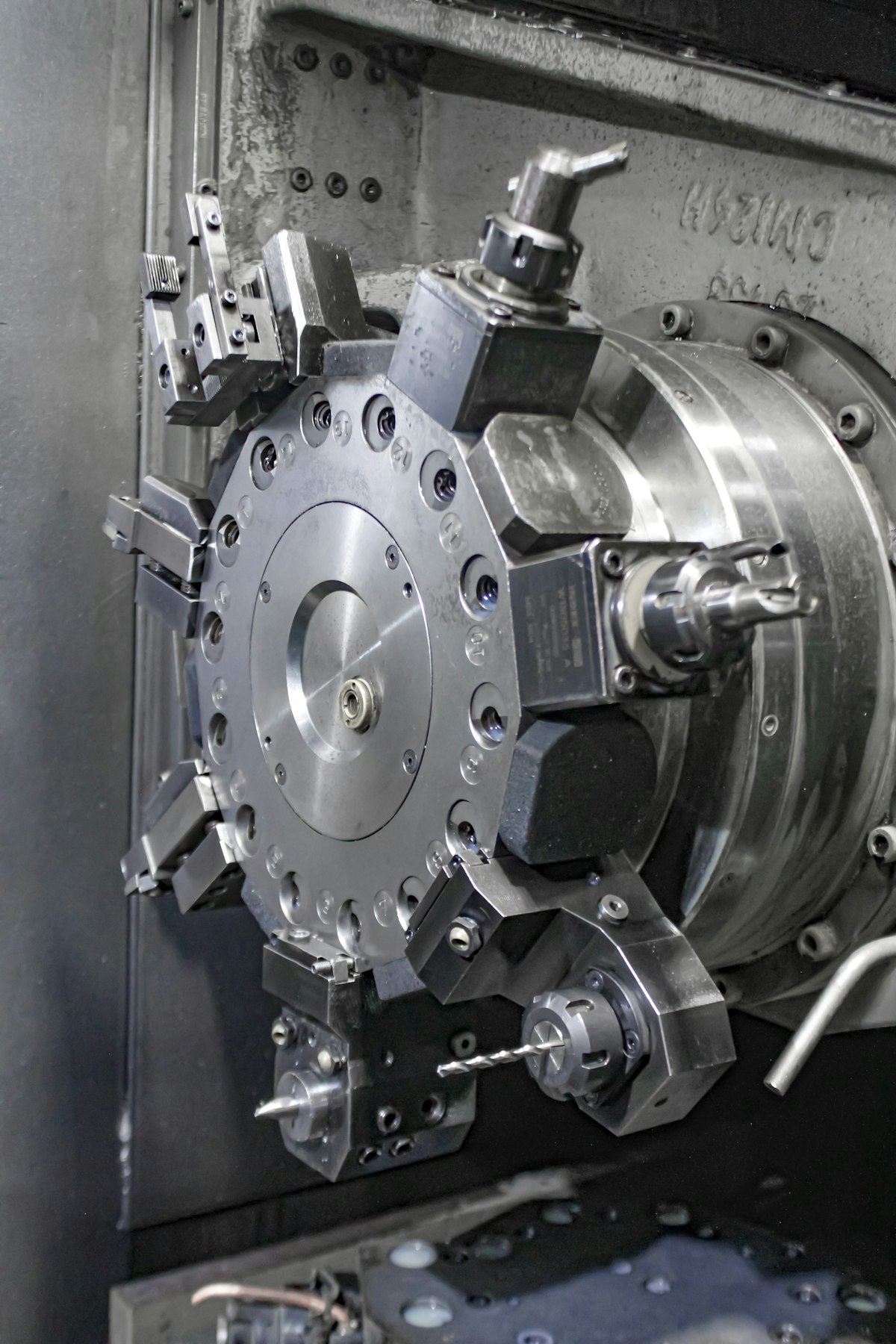
Acetal does not demand exotic equipment the way some materials do. Most of what separates a shop that machines it well from one that struggles is technique and attention rather than a specific piece of hardware. This checklist covers what actually matters, roughly in order of impact.
Workholding
This is the single largest differentiator between shops that machine plastics regularly and shops that do not.
Soft jaws, cut to the part. Standard hardened steel jaws mark acetal and can distort thin walls under normal clamping pressure. Soft jaws machined to the part’s exact profile spread the clamping force and avoid local high pressure points that dent or deform the material.
Vacuum fixturing for flat parts. A vacuum chuck or vacuum plate holds a flat or thin part without any mechanical clamping force at all, which is often the only way to machine a thin plate accurately without it bowing under the clamp.
Sacrificial or custom fixtures for awkward geometry. A one-off fixture, machined from a cheap material and discarded after the job, is common practice for parts that do not have an obvious clamping surface.
Lower clamping pressure, spread across more points. Where a metal part might be held by two or three points of high clamping force, an equivalent acetal part is often held by more points at lower pressure each, reducing the local stress that causes marking or distortion.
A shop without any of this can still machine simple, robust acetal parts acceptably. A shop that has invested in it can machine thin, precise or awkward parts that would otherwise come back distorted or marked.
Tooling
Sharp, positive rake tooling. Acetal wants to be sliced rather than pushed. Positive rake angles, commonly 10 to 20 degrees, cut cleanly. A neutral or negative rake geometry that would be fine in steel tends to push and deform plastic rather than shear it.
Generous clearance angles. Around 10 to 15 degrees of flank clearance keeps the tool from rubbing the material’s elastic recovery behind the cutting edge, which is a common cause of the smeared, melted-looking surface finish that shows up on acetal cut with the wrong geometry.
Polished flutes and fewer flutes on milling tools. Two or three flute end mills with polished flutes clear chips more effectively than tooling designed for steel, and chip clearance is one of the more common failure points on deep or blind features in acetal.
Dedicated plastic tooling is a bonus, not a requirement. Aluminium tooling kept sharp and used with the right feed produces good results. What actually degrades finish quality is a dull edge, regardless of what the tool was originally designed to cut.
A tool sharpening or replacement discipline. Because acetal shows dull tooling immediately, in the form of smearing and heat marks, shops that machine it well tend to swap or resharpen tooling more proactively than they would for a material that is more forgiving of a slightly worn edge.
Stock handling
Rod and plate storage that avoids warping. Acetal stock, like most thermoplastics, can take a set if stored under load or against an uneven surface for extended periods. Flat, supported storage for plate and properly supported racking for rod keeps stock true before it ever reaches the machine.
Enough grade variety to serve real requests. Natural homopolymer and copolymer cover most work. Shops that also stock PTFE filled, glass filled or food contact grades can quote a wider range of requests without an ordering delay, which is a real advantage when matched against time-sensitive RFQs.
A system for tracking material certificates. For any shop taking on food contact, medical or aerospace-adjacent work, being able to trace a finished part back to a specific batch certificate is often a hard requirement, not a nice to have.
Process capability
A documented inspection temperature practice. Because acetal expands roughly ten times as much as steel per degree, a shop that measures parts at a consistent, known temperature, and lets warm parts settle before final inspection, produces more reliable dimensional reports than one that measures straight off the machine.
Access to stress relief, in house or through a partner. An oven for annealing thick or tightly toleranced parts between roughing and finishing is not required for every job, but a shop that has one, or has a reliable partner that does, can take on a wider range of tolerance-critical work.
A deburring process that treats it as a real operation. Acetal holds a fine, flexible burr that folds over rather than breaking off cleanly. Shops that budget real hand time for deburring, rather than treating it as an afterthought, deliver more consistent edge quality.
Inspection
Standard dimensional tools are usually sufficient. Calipers, micrometers and a CMM for tighter tolerances cover the large majority of acetal inspection needs. Nothing about the material demands specialized metrology equipment beyond what a shop would already use for precision metal parts.
A first article process that states the inspection conditions. A dimensional report that notes the temperature and settling time the part was measured under is more useful, and more defensible, than one that simply lists numbers against a drawing.
What this checklist is not
It is not a certification requirement, and none of these items are prerequisites to register or to take a lead. A shop with basic soft jaws and sharp tooling, no vacuum fixturing and no in-house annealing oven, can still do good work on the majority of acetal parts that come through as RFQs. This list is a guide to where investment pays off if a shop wants to take on a wider range of requests, particularly the thinner, tighter-tolerance and higher-volume work that separates the specialists from the generalists.
Coolant and dry machining
Acetal can be machined dry, and plenty of shops do exactly that for most jobs, relying on an air blast to clear chips and carry heat away from the cut. This works well for the majority of parts and avoids the complication of coolant compatibility with the material.
Coolant earns its place on specific operations rather than as a blanket practice: long finishing passes where heat has time to build, deep bores where chip evacuation is difficult, and thin walled parts where localized heat could distort a feature before it is finished. Water soluble coolant is the usual choice when one is used. Aggressive or oil based coolants are worth avoiding, since acetal shows less benefit from them than metals do and some formulations are not fully compatible with the material’s surface.
A shop equipped to run both, dry for routine work and coolant for the specific operations that benefit from it, has more flexibility than one committed entirely to one approach.
A simple self-assessment
Before registering, it is worth an honest look at four questions:
- Do we already keep acetal rod or plate on hand, or would a request mean placing a special order first? Shops with stock on hand can typically quote and turn around faster, which matters for time sensitive RFQs.
- Have we successfully held a tolerance tighter than plus or minus 0.05 mm on a plastic part before, or would this be a first attempt? There is nothing wrong with a first attempt, but knowing which situation applies helps set realistic expectations on a quote.
- Do we have a workholding solution beyond a standard vice for a part that cannot take heavy clamping pressure? If not, registering for thinner or more delicate parts may lead to leads that are hard to execute well.
- Can we produce a material certificate or batch traceability record if a buyer asks for one? This matters most for food contact, medical or regulated industry work, less for general industrial parts.
None of these questions have a wrong answer that disqualifies a shop from registering. They help set which kinds of requests are worth taking once previews start arriving.
Where this fits into registering
None of this equipment is verified at registration. What matters is registering accurately: the machines, tooling approach, stock and capabilities a shop actually has, so the requests that get matched are ones it can genuinely win. A shop that is honest about a lighter equipment list still gets matched to work that fits it well.
Ready to see what requests fit your shop? Register your shop and start receiving previews matched to your machines and stock. We reply within 24 business hours.
Frequently asked questions
Do I need dedicated tooling to machine acetal well?
Dedicated plastic tooling, sharp positive rake, polished flutes, helps, but it is not strictly required. Aluminium tooling in good condition can produce acceptable acetal parts. What matters more is keeping edges sharp and running the right feed rather than owning a separate tool crib.
Can I machine acetal without an oven for annealing?
Yes, for most parts. Annealing only matters for thick sections, tight tolerances over a long face, or parts machined from plate with a lot of stock removed on one side. A shop without an oven can still take on the large majority of acetal work and send the occasional part needing stress relief to a partner who has one.
What separates a shop that is genuinely equipped for plastics from one that is not?
Workholding built for soft material rather than a standard steel vice, tooling kept sharp specifically because plastic shows dull edges immediately, and a documented approach to inspection temperature. Those three things show up in the parts before anyone checks a machine list.
Need a quote for this part?
Send the drawing. We match you with up to 3 shops that machine acetal and reply within 24 business hours.
Get matched with a Delrin shop